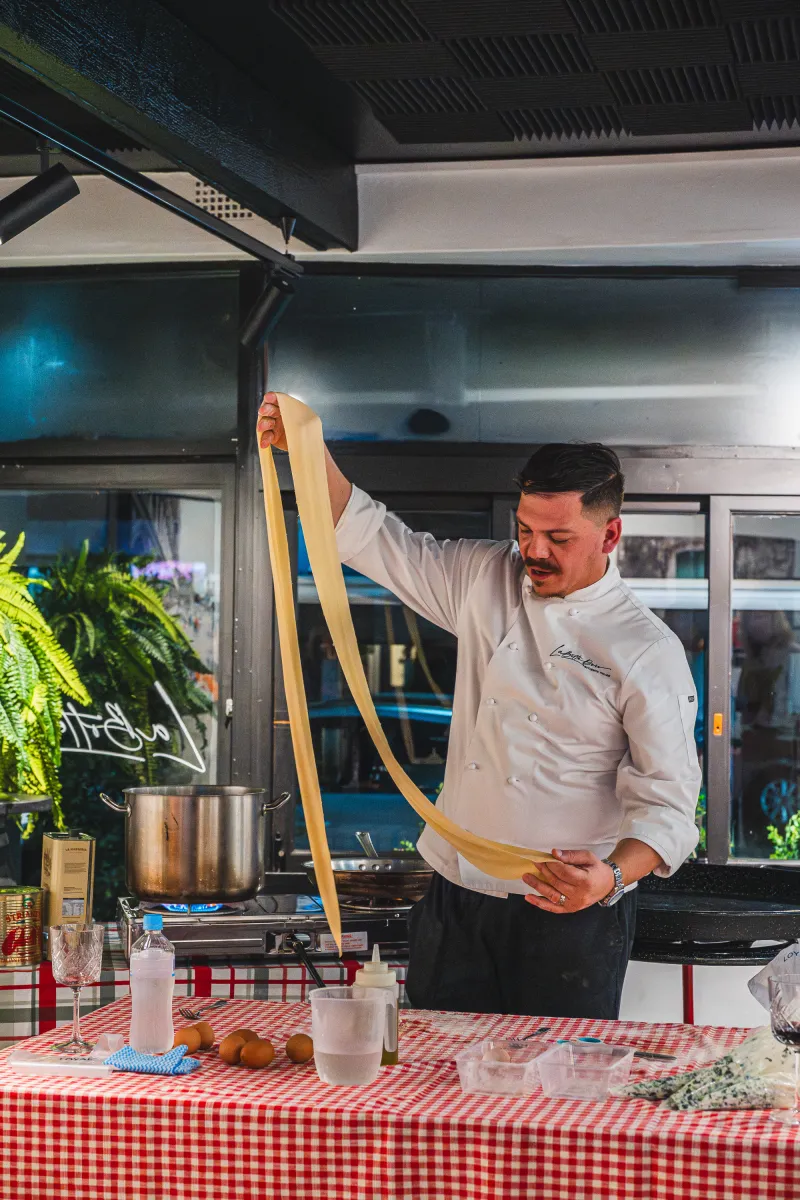
If you walk down Marion Street in Leichhardt in the early afternoon, you can smell the soffritto. It’s a scent that has defined this corner of Sydney’s Inner West for nearly half a century. At the center of it is La Botte D'Oro, a restaurant that has been rolling fresh pasta in Leichhardt since 1977.
To understand the story of fresh pasta in Leichhardt is to understand the history of Sydney’s Italian quarter itself. It’s a tale of migration, family devotion, and a commitment to keeping culinary traditions alive, one ribbon of pappardelle at a time.
1977: The Dawn of a Leichhardt Institution
In the late 1970s, Leichhardt was rapidly transforming into the heart of Sydney’s post-war Italian community. Back then, Norton and Marion streets were filled with traditional Italian grocers, butchers, and the clack of espresso machines. When La Botte D'Oro opened its doors in 1977, the goal was simple: serve food that tasted like home.
In a time when "Italian food" in Sydney was often simplified, La Botte D’Oro introduced locals to authentic regional Italian cooking. The foundation of this menu was, and has always been, fresh, hand-rolled pasta.
Nonna’s Philosophy: No Shortcuts, No Compromises
For 49 years, our kitchen has followed a single, non-negotiable rule passed down by the family matriarch: cook with your whole heart, and never rush a good thing.
In the early mornings, our kitchen turns into a workshop. We mix premium tipo 00 and semola flours, crack fresh eggs, and knead the dough by hand. Using a traditional manual sheeter (sfogliatrice), we roll it out to the perfect thickness before cutting it into shapes.
This handmade process is what gives our pasta its unique texture. Unlike smooth, machine-extruded dried pasta, hand-rolled pasta has a slightly rough, porous surface. This is what allows our slow-cooked sauces—like our legendary Pappardelle Bolognese—to cling to the pasta rather than pooling at the bottom of the plate.
The Sauces That Defined a Generation
You can’t talk about our fresh pasta without talking about the sauces that accompany them.
- Pappardelle Bolognese: A recipe unchanged since 1977. Built on a rich foundation of finely diced celery, carrots, and onions (soffritto), slow-cooked beef and pork, red wine, and a splash of milk. It simmers gently for over 6 hours every day.
- Ragù di Agnello (Lamb Ragù): A winter favorite. Tender lamb shoulder slow-cooked until it melts off the bone, infused with fresh rosemary and garlic, served over fresh ribbons of pasta.
- Orecchiette with Broccoli Rabe: A classic southern Italian recipe, honoring the Pugliese traditions of our founding heritage.
49 Years of Community at Marion Street
Over the decades, Leichhardt has changed. Trendy cafes have opened, and Sydney’s Italian community has spread across the Inner West. Yet, La Botte D'Oro remains a constant anchor.
Today, under the watchful eye of Gabriele Franco, the restaurant continues to welcome the children and grandchildren of the guests who first walked through the door in 1977. For many, La Botte D'Oro is still the best Italian restaurant in Leichhardt.
"People don't just come here to eat," Gabriele says. "They come to feel like they are part of a family. They come for the connection."
What "Made by Hand" Actually Means Here
The phrase gets used loosely, so here is the specific version. The dough is mixed each morning, not the night before, because semolina dough stiffens as it sits and a stiff dough gives you pasta that never quite loses its chalkiness in the middle. It rests under cloth for about half an hour — long enough for the flour to hydrate fully, short enough that it has not started to dry at the edges.
The shapes decide the sauce, not the other way round. Pappardelle is cut wide because a slow-cooked lamb ragù needs a surface broad enough to carry it; a thinner ribbon would be swamped. Ravioli are filled and sealed the same morning they are served, because a filled pasta left overnight weeps moisture into its own casing and splits when it hits the water. Gnocchi are rolled soft, which is uncomfortable to work with and the entire reason they do not come out like erasers.
None of this is a secret and none of it is clever. It is just slower than the alternative, and it is the part that gets dropped first when a kitchen gets busy. Forty-nine years in, it is the part we have not dropped.
Frequently Asked Questions
Is the pasta at La Botte D'Oro really made in-house?
Yes — it is made by hand in our Leichhardt kitchen, mixed fresh each morning rather than bought in dried or frozen. The pappardelle, the ravioli and the gnocchi are all made on site.
Do you make gluten-free or vegetarian pasta dishes?
Yes. Gluten-free pasta is available, and several of the pasta dishes are vegetarian. Tell us when you book, or when you order, and the kitchen will work around it rather than improvise on the night.
What is the difference between fresh pasta and dried pasta?
Fresh pasta is made with soft flour and eggs and cooks in a few minutes, giving a softer, more porous texture that holds creamy and slow-cooked sauces. Dried pasta is made from durum semolina and water, cooks firmer, and suits oil- and seafood-based sauces. Neither is better — they are built for different jobs, and a kitchen that makes fresh pasta usually serves both.
Which pasta dish should I order first?
The slow-cooked lamb ragù pappardelle, if you want the dish the kitchen is known for, or the carbonara if you want to judge the fundamentals — there is nowhere to hide in four ingredients. See the full menu for the rest.
Experience the Tradition
As we approach our 50th anniversary, we invite you to join us at the table to taste the history yourself.